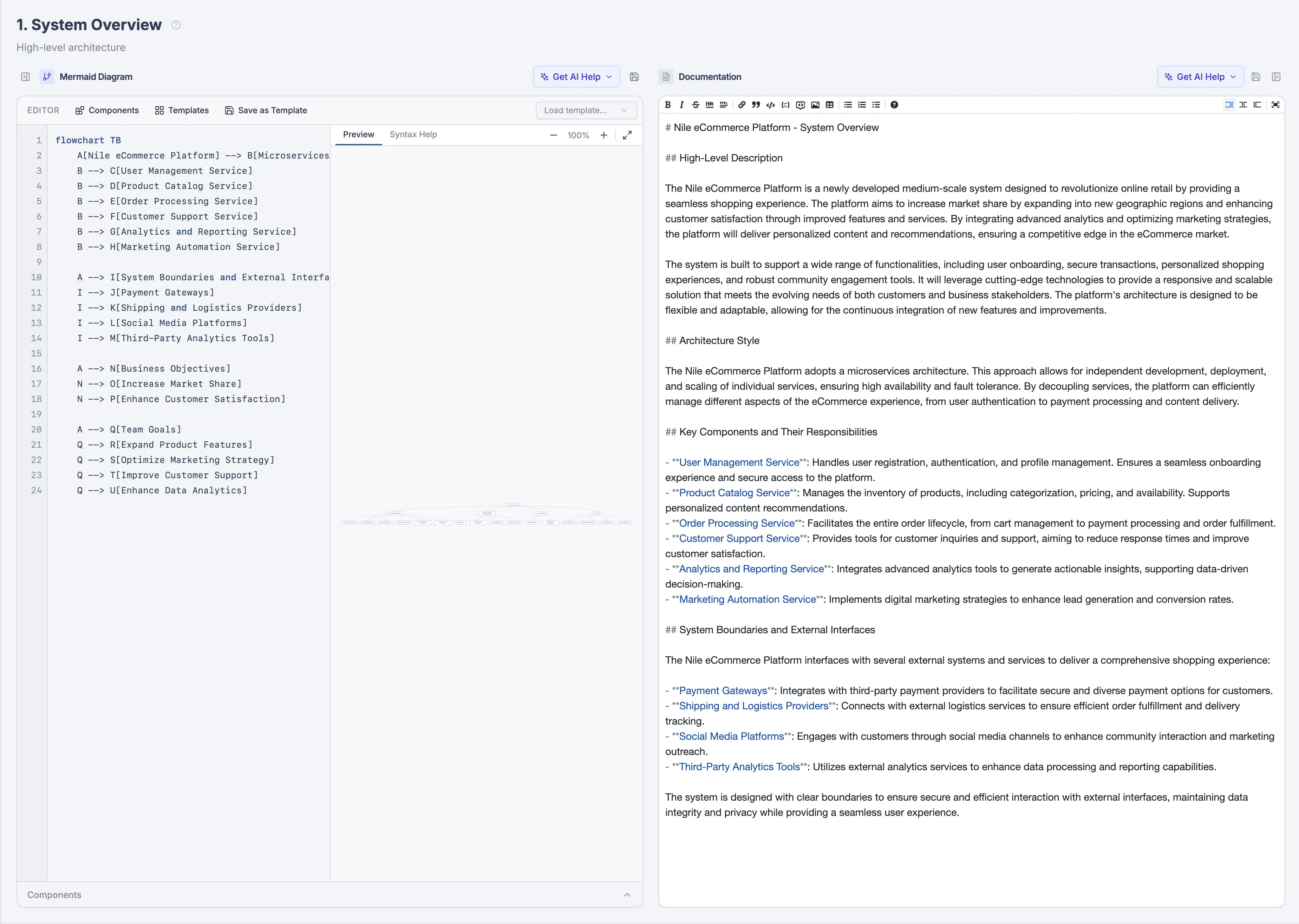
Why we built Foundation
Most PRD tools are either blank pages that stare back at you, or chatbots that write requirements you can’t trust. We built Foundation because neither extreme works.
Rules are authoritative. AI assists.
Our core belief is simple: product decisions must stay with humans, but AI can handle the mechanical parts of turning ideas into clear, complete documents. Foundation gives teams a structured workspace for PRDs and TDDs, guided by a deterministic rules engine. The engine checks for missing sections, inconsistent constraints, and incomplete acceptance criteria before any AI suggestion is accepted.
When you draft a PRD, Foundation doesn’t replace your judgment. It surfaces gaps, proposes wording, and helps you iterate. The rules decide what “good” looks like. You decide what ships.
The workflow at a glance
flowchart LR
    A[Write a section] --> B{Rules pass?}
    B -->|Yes| C[AI enhancement available]
    B -->|No| D[See failing issues]
    C --> E[Accept, edit, or reject]
    D --> E
    E --> F[Move to next section]
This loop keeps quality high without slowing people down. The rules run first because they’re cheaper and deterministic. The LLM only runs when there’s something specific to improve, which keeps token costs and hallucinations low.
What that looks like in practice
Our editor mixes a structured outline with AI chat. Every section has a rule set, a score, and a clear action list. When rules pass, you see a green indicator. When they don’t, you get specific, line-level feedback rather than vague advice.
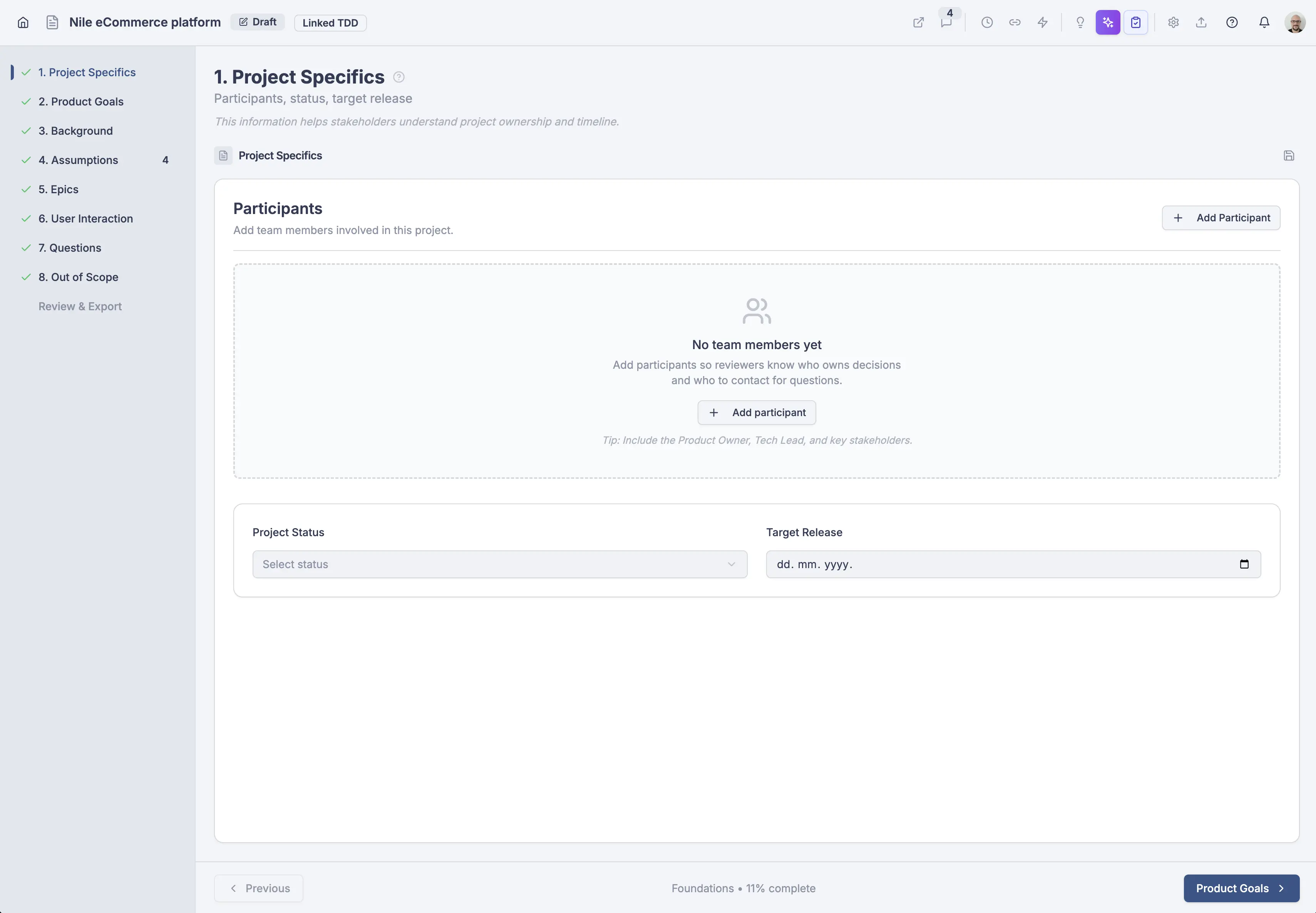
The screenshot above shows the core idea: structured requirements on the left, AI chat on the right, and deterministic scoring that tells you exactly what’s left to fix.
Why this matters
AI writing tools are getting better every month. But “better at writing” doesn’t mean “better at deciding.” A product requirement is a promise between a team and the rest of the company. If that promise is generated by a model with no guardrails, the team will spend more time validating it than writing it.
Foundation inverts that. The rules are the guardrails. The AI fills in the gaps. The human makes the call.
We also care about discoverability. Every Foundation document is plain Markdown, versioned in git, and exportable to PDF or integrations. The authoring interface is helpful, but the artifact stays portable.
What’s next
We’re starting with PRDs and TDDs, then expanding into architecture decision records, API specs, and incident write-ups. The same rules-first approach applies: define quality explicitly, let AI accelerate the parts that are mechanical, and keep the author in charge of the final judgment.
If that resonates, follow along on this blog. We’ll share more about the rules engine, prompt patterns, and how we think about AI-assisted product work.